Car Parks to Castles; and everything in between
I was delighted to return to the Peter Corry Productions team in April 2026 as a Production Assistant. Having previously worked with the company as both a performer and administrative assistant, I knew I was joining a team where no two projects are quite the same.
I was initially brought on board to work towards a pre-Fleadh event that PCP had successfully tendered for. What followed, however, was a summer that took me far beyond that original brief – from souring music for a Phantom of the Opera-inspired performance, to developing entertainment proposals for a major international sporting event, on-the-ground production support for concerts in the grounds of Hillsborough Castle, and coordinating a large-scale outdoor event in a Bangor car park.
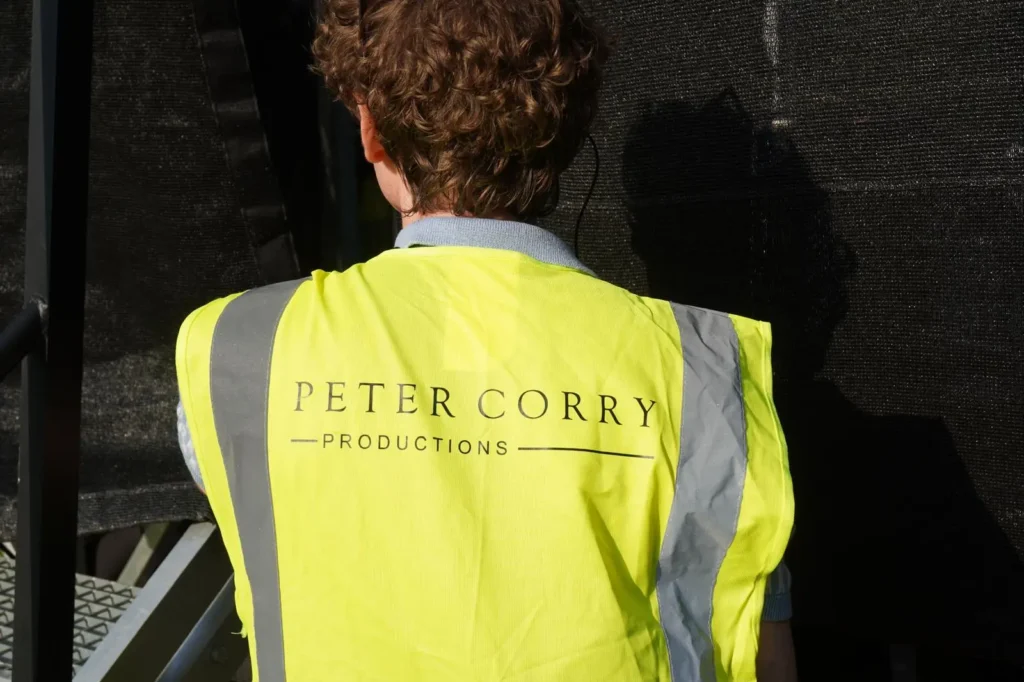
Just as no two projects are the same, no two clients are the same, and getting to know them and understand their priorities with a potential performance is such a crucial part of the work. On returning to Peter Corry Productions, I was lucky enough to start working with some first time clients, and leading discovery sessions to explore what could be possible. These initial discussions led to proposals and pitches where visuals and sample excerpts of music are supplied to give an idea of what the end product may look like.
It has been a busy four months, but more importantly, it has been a valuable reminder of just how varied a career in live production can be.
The Music of the Night
One of the things I have always enjoyed about working with PCP, whether as a performer or in production, is the variety of work I get to be involved in.
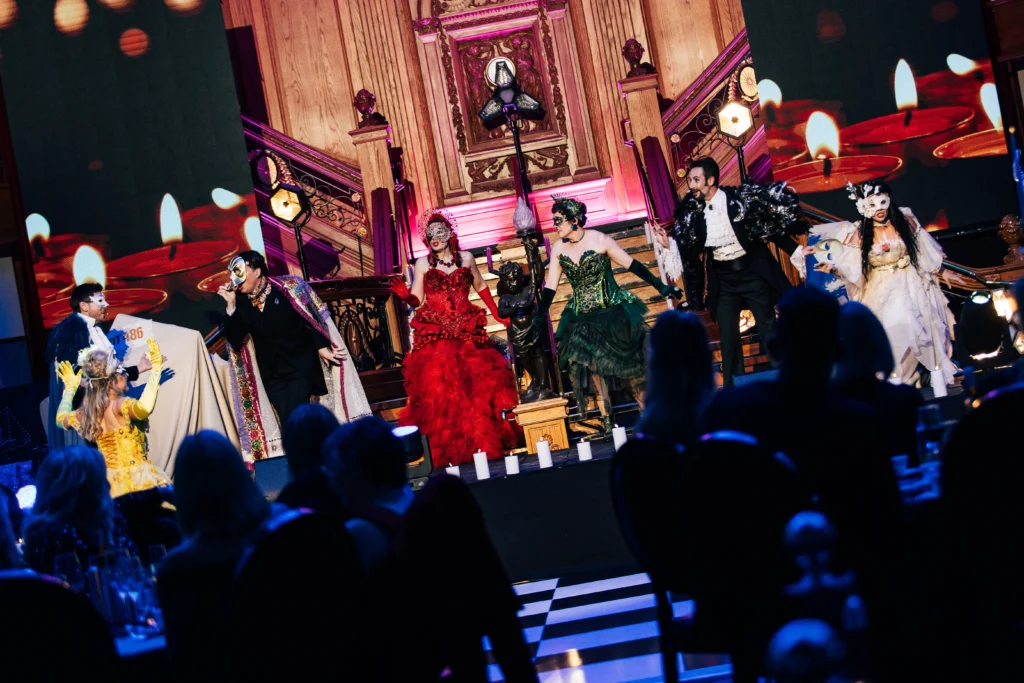
In May, as part of the preparation for Cancer Focus Northern Ireland’s Masquerade Ball at Titanic Belfast, I worked alongside the creative team to source and prepare music for a bespoke performance inspired by The Phantom of the Opera.
While something of a musical puzzle to capture the essence of The Phantom of the Opera in four short sets across an evening, alongside the production team, I sourced specific arrangements, checked keys and instrumentation, found suitable rehearsal tracks, and cut and annotated the music to support the artists during the rehearsal process.
It was a great example of how coming from a creative background can be a significant advantage in production. Understanding musical terminology, the needs of performers and musicians, and how a piece of music works within a rehearsal room – all crucial for creating a smooth and cohesive process for everyone involved.
Thinking Beyond the Theatre
Another highlight of the summer was the opportunity to work on a major sporting tender – this was very different from the majority of work I had previously undertaken, and that was exactly what made it such a valuable experience. Rather than thinking about entertainment within a theatre or concert environment, we were developing an entertainment strategy on a much larger scale, with a focus on showcasing the breadth and quality of Irish talent.
One of the key elements was developing an all-Ireland roster of artists; considering how local and emerging talent could sit alongside some of Ireland’s best-known performers and contribute to a genuinely world-class entertainment programme. This involved hours of research online and connecting with networks for recommendations – a job that in a busy production schedule, you rarely get the chance to do.
The project also required a different way of thinking about audience and delivery. We were considering not only the live audience experience, but how entertainment works within a global sporting broadcast: how a performance can enhance the atmosphere in the venue while also translating effectively to television audiences.
Working on something outside your usual area of knowledge forces you to ask different, and what sometimes feel like ‘stupid’, questions. There is a need to learn the language of the client, industry and understand their priorities to find the points where live entertainment can add value.
From Theatre to Castle Grounds
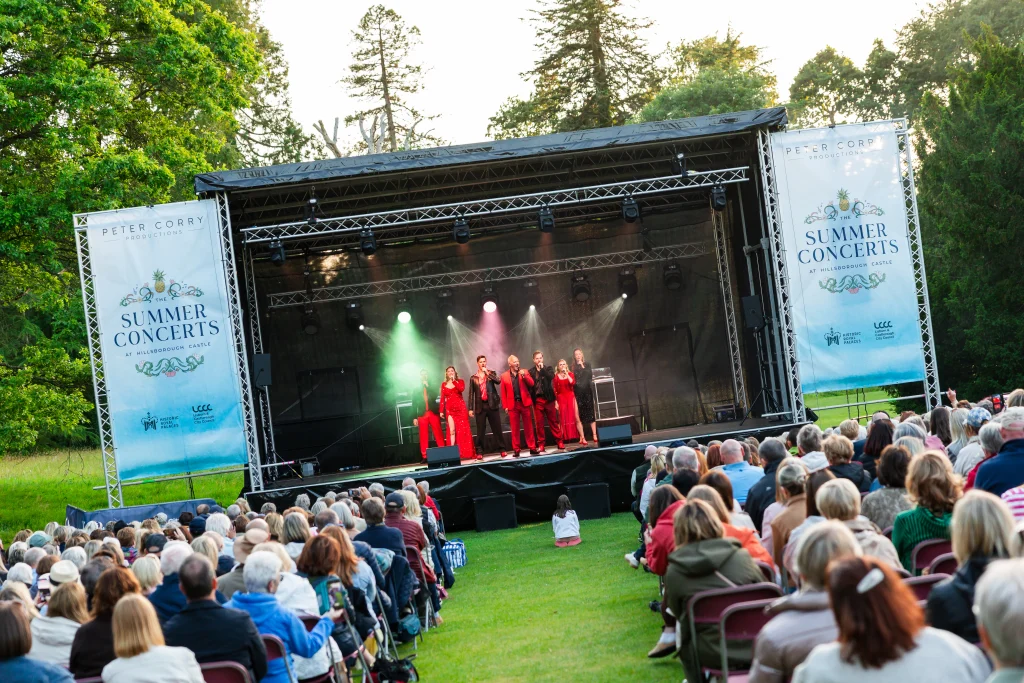
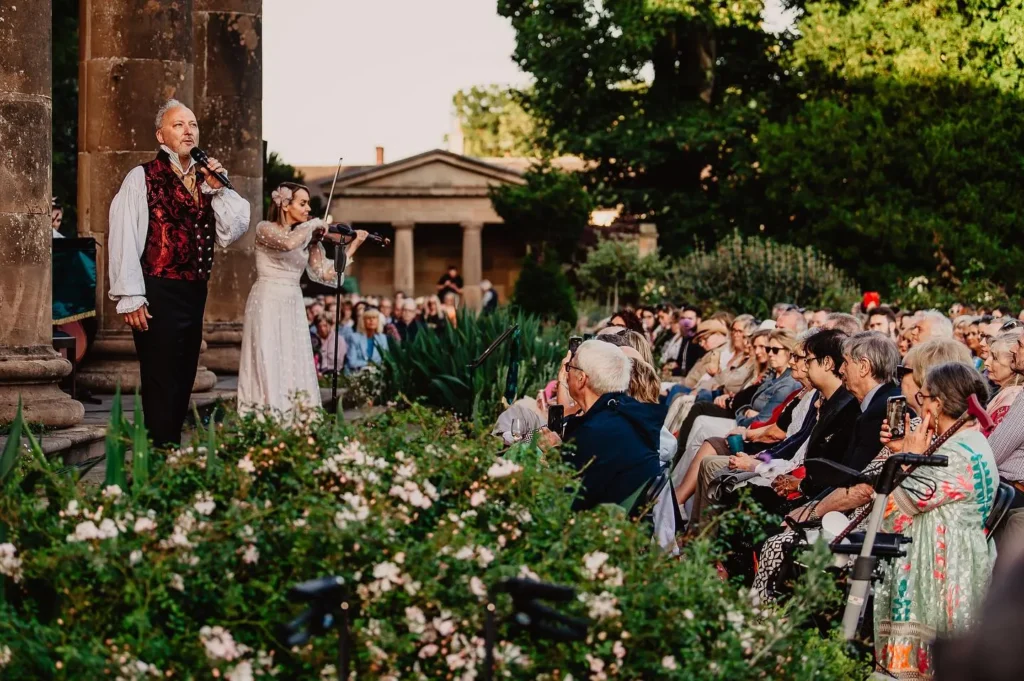
The summer also gave me the opportunity to support the delivery of the Hillsborough Castle Summer Concert Series, delivered by Peter Corry Productions in partnership with Historic Royal Palaces and Lisburn and Castlereagh City Council.
Working in the grounds of a castle, rather than a theatre, completely changes the way you approach an event:
- There is no traditional backstage.
- There are longer distances between different areas of the site.
- Travel time becomes a consideration in even the simplest task, therefore equipment and artists need to be carefully planned out from the moment you enter on site.
It sounds simple, but these details fundamentally change the way you work. That meant strong communication was essential. Everyone needed to know where they needed to be, when they needed to be there and what was happening next.
It was also a brilliant opportunity to work alongside Historic Royal Palaces. Their knowledge, professionalism and dedication to the site set a real standard for the partnership. Bringing together two organisations with very different areas of expertise, live entertainment and heritage/tourism, demonstrated what can happen when those strengths complement one another.
Bangor Beats and Rhythms; Transforming Car Park to Festival Site
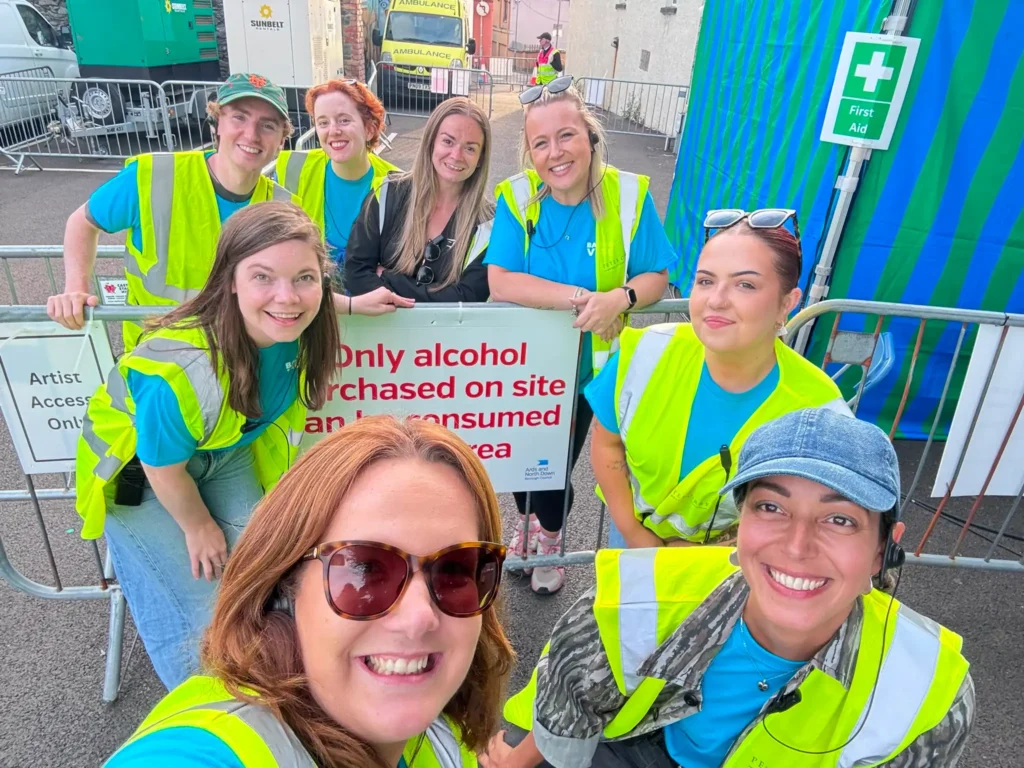
Perhaps the project that brought all of these experiences together was Bangor Vibes, which was delivered for Ards and North Down Council.
Working alongside Peter, I led on the coordination and delivery of a pre-Fleadh event in Bangor, Bangor Beats and Rhythms, as part of a wider ‘Bangor Vibes’ programme which took place in the city 1st-2nd August. This was delivered ahead of Belfast hosting Fleadh Cheoil na hÉireann from 2nd-9th August.
This was a particularly interesting production challenge because the main event site was, quite literally, a car park. Luckily, the Hillsborough Summer Concerts helped embed some key learnings ahead of time.
Starting with an open space and having to build an event around it meant considering everything from toilets, furniture, catering, access points to audience circulation, crowd flow and the positioning of the stage and other infrastructure.
There was also a different approach to the audience itself. This wasn’t a traditional ticketed, seated concert where everyone arrives at the same time, is seated and remains there for the duration of the performance. The event was designed to be fluid, with people moving between different areas and events throughout the day. This meant programming and site planning had to work together.
We needed to make sure audiences could experience as much as possible without different elements of the programme competing with one another. We were also working alongside other events taking place in Bangor, contributing to a wider programme that encouraged people to spend time in the city and support local businesses.
Behind the scenes, there was a significant amount of stakeholder coordination. Working with local authorities and other organisations through the Safety Advisory Group and Joint Agency Group processes was an important part of ensuring the event could operate safely and effectively. At the same time, we were liaising with local businesses to minimise disruption while maximising the opportunity that an influx of visitors could bring to the local economy.
And then there was the entertainment; the ambition was to create a programme that celebrated Irish and Scottish traditional music and culture, while remaining accessible, fresh and entertaining for audiences who might be discovering some of this music for the first time.
We were fortunate to work with an excellent line-up of performers, including Lauren Smyth (Former Principal Riverdance dancer), Matthew Campbell (The Shamrocks), Ards CCÉ and Oisin McCann, alongside Cool FM’s Rebecca McKinney as host. The programme brought together traditional music, dance, song and audience participation to create something that felt distinctly connected to the spirit of the Fleadh while still being its own event.
The response was fantastic, with more than 7,000 people attending across the day.
For me, however, the success wasn’t just measured by the numbers. It was seeing an empty space transformed into a busy event site, watching audiences move between performances, getting involved in set dancing, discovering new artists and returning throughout the day.
That is the part of production I find most rewarding: seeing all of the conversations, spreadsheets, schedules, meetings, risk assessments, phone calls and seemingly endless lists eventually become something that an audience simply experiences as a great day out.